Walk the beach here any morning this week and you'll see the same thing: staked-off patches of sand, some circled in orange tape, a few flattened tracks leading down to the tideline that weren't there yesterday. If you've lived in Melbourne Beach for more than a season, you've probably stopped registering it as unusual. Turtle season, you figure, wrapped up a while back. The news stories about nesting counts ran in May and June. The mother turtles have mostly finished their work.
That assumption is the part worth checking. The loud, photographed half of the season is winding down. The part that actually shapes how careful you need to be with a porch light or a beach walk after dark is just getting started, and it runs longer than most people plan for.
The Math Nobody Mentions in June
Loggerheads and green turtles nest on Brevard County beaches from May through October. Most of that six-month window gets almost no attention outside of a springtime headline count. But nesting is only step one. A nest takes roughly 55 to 60 days to incubate before it hatches, which means a nest a female dug in early August won't produce hatchlings until October.
That lag is easy to miss if you're only tracking the season by when the adult turtles show up. The U.S. Fish and Wildlife Service, which manages the Archie Carr National Wildlife Refuge running along this stretch of coast, puts it plainly: nesting activity drops off as fall approaches, but the hatchlings are just getting started. Right now, in the back half of August, you're standing in the gap between those two facts. Nesting has largely wound down. Hatching has barely begun.
The scale of what's happening underfoot is easy to underestimate too. The refuge stretches 20.5 miles between Melbourne Beach and Wabasso Beach, and Fish and Wildlife describes it as the most significant loggerhead nesting habitat in the world and the most important green turtle nesting habitat in North America. In a typical year, that stretch of sand holds 15,000 to 20,000 nests, producing somewhere between 1.5 and 2 million hatchlings. None of that is abstract or offshore. It's the same beach you drive past on your way to the grocery store.
Why the Quiet Stretch Matters More Than the One Everyone Talks About
Nesting is the event people notice because it's visible in a way hatching isn't. A large turtle crawling ashore at night makes for a good photo and a good headline count. Hatching doesn't work that way. It happens in scattered bursts, on different nights, across a corridor that runs from late July into October. There's no single weekend to circle. It's a slow release spread over roughly ten weeks, which is exactly why it's easy to let your guard down on the small stuff. The tourist traffic has thinned, the summer heat has settled into routine, and it's tempting to assume the ecological drama packed up with the crowds.
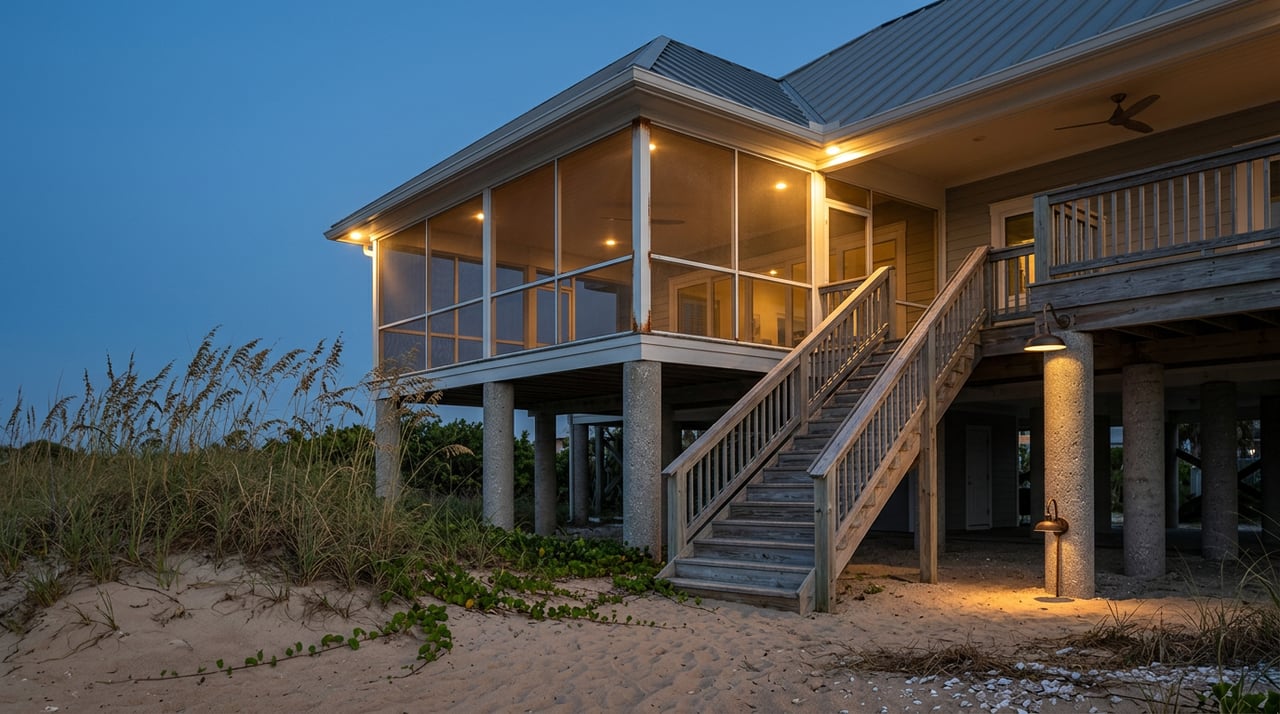
It didn't. If anything, this stretch is the more fragile one. A hatchling that gets disoriented by a porch light or a phone flashlight can wander toward a parking lot instead of the surf, and that single wrong turn is often fatal. Nesting females are large, mobile, and have survived plenty of encounters with artificial light already. A two-inch hatchling has none of that margin.
What Actually Changes at Your House Right Now
None of this requires rearranging your life. It requires a handful of small habits that matter more between now and October than they did in June.
- Keep beachfront lighting off or shielded after dark. Artificial light is one of the most reliable ways to pull a hatchling away from the water instead of toward it.
- Skip the flashlight and the camera flash if you're on the sand after sunset. Guided programs in this area rely on red-filtered light for the same reason.
- Expect limited access after dark. Independent nighttime beach walks are restricted within the refuge to protect both people and active nests.
- If you're walking a dog near the dune line in the evening, plan for restrictions. Nesting beaches along this corridor commonly limit or regulate dog access to protect nests and hatchlings.
None of that is a burden if you already live here. It's more like the seasonal equivalent of remembering to bring in the trash bins before a Tuesday pickup. It only becomes a problem when you forget it's happening at all.
Where to See It Without Getting in the Way
One detail catches people off guard: the refuge itself doesn't run public turtle walks, digs, or releases. If you've been picturing Fish and Wildlife rangers leading nightly beach tours, that's not how it works here. The programs that exist come from separate conservation groups working the same stretch of coast.
If you want a daytime, no-guesswork way to understand what's happening on this beach, the Barrier Island Center at Doc Ehrhart Sanctuary is the place to start. It's open 9 a.m. to 5 p.m., closed Mondays, and includes exhibits on sea turtles and the barrier island ecosystem, a roughly one-mile dune-to-lagoon nature trail, and a lagoon kayak launch. It's a low-key way to see the terrain these turtles depend on without disturbing anything.
For something closer to the actual process, the Sea Turtle Conservancy runs public morning nest digs on Tuesdays at 7:45 a.m., a schedule that holds from late July through September. That means there are still several Tuesdays left this year to see how a hatched nest gets documented, assuming you're an early riser. If you'd rather just walk a stretch of the real thing on your own during daylight, the refuge includes public beach access points like Golden Sands and Treasure Shores, where you can see staked nests and tracks without any guided program at all.
The Short Version
The turtle season that gets covered every spring is really just the deposit. The withdrawal, the part where a million or more hatchlings actually make their run for the Atlantic, happens now, through October, on the same sand most Melbourne Beach residents walk past without a second thought. It asks very little of you: a dimmer porch light, a later or shorter beach walk after dark, a bit of patience if a stretch of sand is roped off longer than you expected. In exchange, you're living next to one of the most productive sea turtle nurseries on the planet, and for the next several weeks, it's actively at work.
If you already call this stretch of coast home, this is just one more piece of the rhythm you've probably picked up without naming it. If you're still trying to picture what day-to-day life along Melbourne Beach actually feels like, from the beach access points to the pace of a place that slows down exactly when the calendar says summer should be winding up, that's the kind of detail worth talking through before you ever look at a single listing. Take a closer look at the Melbourne Beach neighborhood guide, and when you're ready for a conversation about what it's actually like to live here, Let's Connect with Your Home in Brevard.